Recessed lighting in bathrooms is one of those upgrades that looks simple on the surface but has more moving parts than most homeowners expect. Get it right, and you end up with a clean, spa-like ceiling that delivers even illumination from the shower to the vanity mirror. Get it wrong, and you're dealing with code violations, moisture damage, or fixtures that simply aren't rated for the environment.
Bathroom lighting carries specific requirements that don't apply anywhere else in the house. The National Electrical Code sets rules about fixture ratings based on proximity to water, GFCI protection is mandatory, and the distinction between a "wet" and "damp" location can determine which product you're legally allowed to install. Whether you're a homeowner planning a renovation or a contractor speccing a new build, understanding these rules before you buy a single fixture saves time, money, and potential rework.
This guide walks through everything you need to know about recessed lighting in bathrooms: the rating system, placement best practices, NEC code requirements, spacing logic, and how to choose fixtures that perform in a high-humidity environment. By the end, you'll have a clear plan for a bathroom lighting layout that's both code-compliant and genuinely well-designed.
Why Recessed Lighting Works So Well in Bathrooms
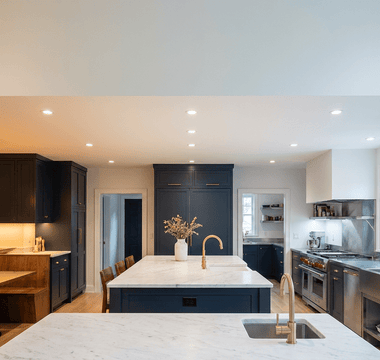
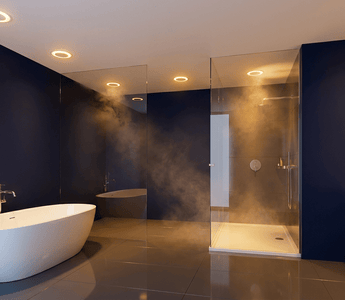
Bathrooms present a unique design challenge: the space needs to feel open and relaxing while still delivering enough light for precision tasks like shaving or applying makeup. Surface-mounted fixtures can feel bulky in smaller bathrooms, and a single overhead fixture almost always creates unflattering shadows around the face. Recessed lighting solves both problems. By distributing multiple fixtures across the ceiling, you create even, shadow-free illumination that works for everything from a quick morning routine to a long soak in the tub.
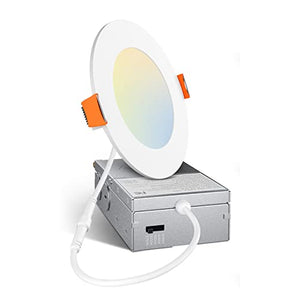
Beyond aesthetics, recessed lights have a practical advantage in bathrooms: they don't collect moisture, soap residue, or dust the way pendant or globe fixtures do. A properly rated recessed fixture sits flush with the ceiling, keeps its internal components sealed from humidity, and requires far less maintenance over time. For bathrooms with low ceilings, the slim profile of modern canless recessed fixtures is especially valuable, preserving every inch of headroom without sacrificing style or output.
Wet, Damp, and Dry Ratings: What They Mean and Why They Matter
The single most important thing to understand about bathroom recessed lighting is the location rating system. Fixtures are classified as suitable for dry, damp, or wet locations, and the NEC requires you to match the fixture rating to the installation environment. Using the wrong rating isn't just a code violation — it's a safety hazard that can lead to moisture infiltration, electrical shorts, or fixture failure.
- Dry Location: Standard indoor spaces where no moisture is present. Dry-rated fixtures are not appropriate for any part of a bathroom ceiling.
- Damp Location: Areas subject to condensation or indirect moisture exposure, but not direct water contact. Most of the bathroom ceiling (outside the shower zone) qualifies as a damp location. Fixtures must be marked "Suitable for Damp Locations" and have sealed trim to prevent moisture ingress.
- Wet Location: Areas directly exposed to water, including the interior of a shower enclosure or directly above a shower or bathtub without a protective barrier. Wet-rated fixtures must be marked "Suitable for Wet Locations" and are typically fully sealed with a gasketed lens or cover.
A common mistake is assuming that any recessed light will work in a bathroom as long as it "looks sealed." The rating must be explicitly marked on the fixture label and confirmed in the product specifications. When in doubt, step up to the wet rating — it covers all damp-location requirements and gives you more flexibility in placement.
NEC Code Basics for Bathroom Recessed Lighting
The National Electrical Code (NEC), Article 410, governs luminaire installation, and it has specific provisions that apply directly to bathrooms. These rules aren't suggestions — they're minimum legal standards enforced by local inspectors and required for homeowner insurance coverage in most cases.
Zone-Based Fixture Requirements
The NEC defines bathroom zones based on distance from the shower or bathtub water source. Within a horizontal distance of 3 feet from the edge of a bathtub or shower and directly above it up to 8 feet in height, only wet-rated fixtures are permitted. Beyond that 3-foot horizontal boundary but still within the bathroom, damp-rated fixtures are required. This zone system is straightforward once you measure it out on your ceiling plan, and it should inform your fixture selection before you ever go shopping.
GFCI Protection Is Non-Negotiable
All electrical outlets and lighting circuits in bathrooms must be GFCI (Ground Fault Circuit Interrupter) protected per NEC Section 210.8. This applies to every recessed light on the bathroom circuit, not just the ones near the shower. GFCI protection can be provided by a GFCI breaker at the panel or by a GFCI outlet wired upstream of the lighting circuit. Your electrician or local inspector can confirm which method is acceptable under your local code adoption.
Insulation Contact and Airtight Requirements
If your bathroom ceiling has insulation above it (common in single-story homes or in rooms below an attic), fixtures must either be IC-rated (insulation contact) or maintained with at least 3 inches of clearance from any insulation. Additionally, many local codes require airtight (AT) rated fixtures in insulated ceilings to prevent conditioned air from escaping into the attic and to block moisture-laden air from migrating upward — a particularly relevant concern in high-humidity bathroom environments.
Placement Guidelines: Where to Put Your Fixtures
Knowing where to physically position recessed lights in a bathroom makes the difference between a layout that works and one that leaves corners dark or creates glare at eye level. There are a few key zones to consider: the shower or tub area, the vanity, the toilet area, and the general ceiling field.
Shower and Tub Areas
Inside a walk-in shower, center a wet-rated fixture directly over the standing area so the light falls vertically downward without creating shadows from the body. For a shower-tub combo, one centered wet-rated fixture typically covers the zone adequately. Position the fixture at least 12 inches from any showerhead or water outlet — not for code reasons specifically, but to protect the fixture from direct spray and prolong its lifespan. Always verify the wet rating label before purchasing fixtures for this zone.
Vanity Area
Vanity lighting is where most people feel the biggest impact of a good or bad lighting plan. A common mistake is placing a single recessed fixture directly above the mirror, which casts unflattering shadows downward across the face. Instead, position two recessed lights roughly 18 to 24 inches out from the mirror plane (toward the room), spaced symmetrically. This casts light forward onto the face rather than straight down. If you're using a wall-mounted vanity light bar in addition to recessed fixtures, the recessed lights can serve as fill lighting rather than the primary task source.
General Ceiling Field and Toilet Area
For overall ambient coverage, recessed fixtures should be placed with enough spacing to avoid both dark spots and harsh overlap. A common rule of thumb is to divide the ceiling height in half and use that number as your fixture spacing in feet. So in a bathroom with an 8-foot ceiling, space fixtures approximately 4 feet apart. Keep fixtures centered in the ceiling field, and make sure at least one is positioned to illuminate the toilet area, which is often neglected in standard lighting plans.
How Many Fixtures Do You Need?
Bathroom size is the primary driver of fixture count, but fixture output (measured in lumens) matters just as much. For general ambient lighting, target approximately 70 to 80 lumens per square foot in a bathroom — slightly higher than a bedroom because task accuracy matters more in this space. A 60-square-foot bathroom, for example, needs roughly 4,200 to 4,800 lumens of total output. If each fixture produces 800 lumens, that's 5 to 6 fixtures for full coverage.
Most bathrooms land comfortably in the 3 to 6 fixture range depending on size and layout. A small powder room might need only 2 fixtures placed thoughtfully, while a large master bath with a separate shower enclosure, soaking tub, double vanity, and water closet could require 8 or more. Sketch your ceiling to scale before buying, mark the wet zone boundary, and count fixture positions methodically rather than guessing.
IC-Rated vs. Non-IC-Rated Fixtures
IC stands for Insulation Contact, and it refers to a fixture's ability to safely operate when surrounded by attic insulation. Non-IC fixtures generate enough heat that direct insulation contact creates a fire risk — which is why code requires a minimum 3-inch clearance around them. IC-rated fixtures are thermally protected, meaning they can be buried in insulation without that risk. In most bathroom installations, especially in single-story homes or rooms below an attic, IC-rated fixtures are the correct and required choice.
Modern LED recessed fixtures, including Amico's lineup, run significantly cooler than older incandescent or halogen housings, which makes IC compliance more manageable. However, the IC rating must still appear on the fixture label — low heat output alone doesn't satisfy the code requirement. When reviewing product specs, look for fixtures explicitly marked IC-rated, and pair that with an airtight (AT) rating if your local code requires it for insulated ceilings.
Wiring Your Bathroom Recessed Lights Safely
When installing multiple recessed fixtures in a bathroom, each fixture connects to the circuit in a parallel configuration. This means every fixture receives the full line voltage independently, so if one fixture fails or is removed, the others continue to operate normally. Parallel wiring is the correct and code-compliant method for all residential lighting circuits, and it's the only approach that ensures consistent performance across your fixture layout.
For making wire connections at each fixture junction, use push-in wire connectors rather than traditional alternatives. The process is straightforward: strip approximately 1/2 inch of insulation from each wire end, then insert the stripped ends into the appropriate connector ports until you feel them click into place. No twisting is required. This method creates a secure, vibration-resistant connection that is more reliable than traditional alternatives and significantly faster during installation — an advantage that adds up quickly across a multi-fixture bathroom layout.
Before doing any wiring, confirm the circuit is off at the breaker panel and verify with a non-contact voltage tester. All bathroom lighting circuits must be GFCI-protected, and if you're adding new circuits or making changes to the panel, that work should be done by a licensed electrician to meet code in most jurisdictions.
Choosing the Right Amico Fixtures for Your Bathroom
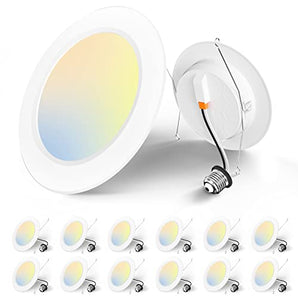
Amico's recessed lighting lineup is built for both residential renovations and new construction, with options that address the practical demands of bathroom installations. Whether you're working with existing can housings or starting from scratch with a new ceiling, there's a fixture format that fits your project. Amico's retrofit can lights are integrated units — the LED module and trim are built as one complete piece, so installation is straightforward without the need to manage separate components. For new construction or open ceilings without existing cans, the 4-inch canless LED recessed lighting and 6-inch recessed LED lighting options allow you to cut directly into the drywall and connect to your circuit without any housing box.
From a performance standpoint, Amico fixtures deliver CRI 80+ color rendering, which means colors, skin tones, and surfaces look accurate and natural under the light — important in a space where you're making grooming decisions based on what you see. With a rated lifespan of 50,000+ hours, these fixtures will outlast multiple bathroom remodels before needing replacement. All Amico LED fixtures are ETL and FCC certified, meeting the safety and performance standards required for residential electrical installations.
For projects that require direction-adjustable output — like highlighting a shower niche or a decorative tile wall — Amico's gimbal recessed lights offer a pivoting head that can be aimed independently of the fixture housing. And for contractors managing multi-unit projects or large-scale renovations, Amico's full recessed lighting collection is backed by a bulk sales program with tiered volume pricing, free sitewide shipping, and 2 to 5 year warranties that protect both the installer and the end client.
Final Thoughts
Recessed lighting transforms bathrooms when it's planned and installed correctly. The key is working through the requirements in order: identify the wet and damp zones based on proximity to the shower or tub, confirm your fixture ratings match those zones, verify IC and airtight requirements for your ceiling type, wire everything in parallel with push-in wire connectors, and protect the entire circuit with GFCI. Get those fundamentals right, and the aesthetic part — spacing, placement, and lumen output — becomes much easier to dial in.
Whether you're upgrading a small powder room or planning a full master bath renovation, the fixture choices you make today will affect how the space looks and functions for the next decade or more. Starting with high-quality, code-compliant fixtures built for the bathroom environment means fewer problems, fewer callbacks for contractors, and a finished result that holds up over time. Take the layout seriously, respect the code, and choose fixtures rated for where they're actually going.
Outfitting a Multi-Bathroom Project?
Contractors and builders can take advantage of Amico's bulk sales program — tiered volume discounts, free sitewide shipping, and dedicated support for large orders. Get a custom quote for your next project.
Request a Wholesale Quote