Table Of Contents
- Why Low-Profile Ceiling Fans Matter for Rooms Under 9 Feet
- Key Features to Look for in Low-Profile Ceiling Fans
- Top Low-Profile Ceiling Fan Picks with Lights
- How to Choose the Right Size for Your Space
- Installation Tips for Flush Mount Ceiling Fans
- Maintenance and Care for Long-Lasting Performance
- Final Buying Considerations
If your home has ceilings lower than 9 feet, you've probably discovered that standard ceiling fans simply won't work. Traditional fans with downrods hang too low, creating safety hazards and making rooms feel cramped. That's where low-profile ceiling fans become essential. These flush mount or hugger-style fans sit close to the ceiling, providing the air circulation and lighting you need without sacrificing headroom or style.
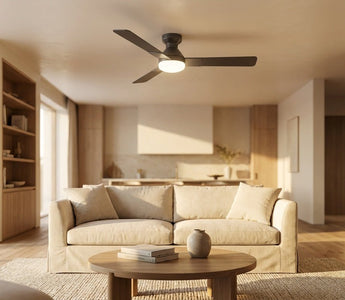
Low-profile ceiling fans with integrated lights solve two problems at once. They keep your space comfortable year-round while eliminating the need for separate light fixtures. This is particularly valuable in bedrooms, home offices, hallways, and condos where every inch of ceiling height matters. Modern low-profile fans have come a long way from the basic models of the past. Today's options feature powerful motors, energy-efficient LED lighting, remote controls, and sleek designs that complement any décor.
In this guide, we'll walk you through everything you need to know about selecting the perfect low-profile ceiling fan with lights for your space. You'll learn which features matter most, how to choose the right size, and discover top picks that deliver both performance and value for rooms under 9 feet.
Why Low-Profile Ceiling Fans Matter for Rooms Under 9 Feet
Building codes and safety standards exist for good reason. The National Electric Code recommends at least 7 feet of clearance between the floor and ceiling fan blades, with 8 to 9 feet being ideal for safety and optimal air circulation. When your ceiling sits at 8 feet or lower, standard ceiling fans with downrods simply won't meet these requirements. Low-profile ceiling fans, also called hugger fans or flush mount fans, are specifically designed to address this challenge.
These fans mount directly to the ceiling or use an extremely short mounting bracket, typically hanging just 6 to 10 inches below the ceiling surface. This minimal profile ensures adequate clearance while still providing effective air movement. Beyond safety compliance, low-profile fans help maintain the visual proportions of a room. A fan that hangs too low in a room with 8-foot ceilings can make the space feel smaller and more confined, while a properly mounted flush fan preserves the open feel.
The integrated lighting feature adds even more value. Instead of installing both a ceiling fan and a separate light fixture, you get both functions in one streamlined package. This is particularly beneficial in smaller rooms like guest bedrooms, apartment living spaces, or finished basements where ceiling height is already limited. Modern low-profile fans with lights deliver impressive airflow despite their compact design, with many models moving 4,000 to 6,000 cubic feet per minute (CFM) depending on blade span.
Key Features to Look for in Low-Profile Ceiling Fans
Not all low-profile ceiling fans are created equal. When shopping for a flush mount fan with lights, several critical features will determine how well the fan performs and how long it lasts. Understanding these specifications helps you make an informed decision that matches your specific needs and room requirements.
Mounting Height and Clearance
The most important specification for any low-profile fan is its actual mounting height. Look for fans that mount within 6 to 8 inches from the ceiling to the bottom of the fixture. This ensures you'll maintain the recommended 7-foot minimum clearance from floor to blade. Some manufacturers list this as "profile height" or "installation height." Always verify this measurement before purchasing, especially if you're working with ceilings right at the 8-foot mark.
Motor Quality and Airflow
The motor is the heart of any ceiling fan. A high-quality motor runs quietly, operates efficiently, and provides years of reliable service. Look for fans with permanently lubricated motors that require no maintenance. Airflow capacity, measured in CFM, tells you how much air the fan can move. For rooms under 9 feet, you want a fan that delivers at least 4,000 CFM for adequate circulation. Many premium low-profile fans include reversible motors, allowing you to switch rotation direction seasonally for year-round comfort.
Blade Design and Pitch
Blade pitch, or the angle of the blades, directly affects air movement. Most effective ceiling fans have blade pitches between 12 and 15 degrees. Low-profile fans often compensate for their proximity to the ceiling with optimized blade angles that maximize airflow. The number of blades matters less than you might think. Three-blade fans can move just as much air as five-blade models when properly designed. Blade finish should be easy to clean and resistant to warping, with sealed finishes performing best in varying humidity levels.
Integrated LED Lighting
Since you're looking for a fan with lights, pay close attention to the lighting specifications. Modern low-profile ceiling fans feature integrated LED lighting that provides excellent illumination while consuming minimal energy. Look for fans with adjustable color temperature settings, often called 3-CCT (Correlated Color Temperature) capability. This feature lets you switch between warm white (3000K), neutral white (4000K), and cool white (5000K) to match your preference and room function. LED lifespan should be rated for 50,000+ hours, essentially eliminating bulb replacement concerns. Color accuracy is measured by the Color Rendering Index (CRI), with ratings of 80+ ensuring colors appear natural and true.
Control Options
Convenient control makes your ceiling fan more functional. Modern low-profile fans typically include remote controls that manage both fan speed and light settings from anywhere in the room. Look for remotes with multiple speed settings (typically 3 to 6 speeds), separate light controls, and timer functions. Some models offer wall control compatibility or smart home integration, though these features typically add to the cost. For basic functionality, a quality remote control provides all the convenience most homeowners need.
Energy Efficiency and Certifications
Energy-efficient fans save money on utility bills while reducing environmental impact. Look for fans with DC motors, which use up to 70% less energy than traditional AC motors. LED lighting adds to the energy savings. Quality ceiling fans should carry ETL and FCC certifications, confirming they meet rigorous safety and electromagnetic compatibility standards. Reputable manufacturers back their products with substantial warranties, typically ranging from 2 to 5 years, demonstrating confidence in their construction quality.
Top Low-Profile Ceiling Fan Picks with Lights
With so many options on the market, finding the right low-profile ceiling fan can feel overwhelming. We've identified top performers that deliver excellent airflow, quality lighting, and reliable operation for rooms under 9 feet. These selections represent the best combination of features, performance, and value for different room sizes and needs.
42-Inch Low-Profile Ceiling Fan with Light
For smaller rooms measuring 100 to 144 square feet, a 42-inch low-profile ceiling fan provides ideal air circulation without overwhelming the space. This compact size works perfectly in guest bedrooms, home offices, nurseries, or hallways with 8-foot ceilings. The flush mount design sits just inches from the ceiling while the integrated LED light panel delivers bright, even illumination throughout the room.
Quality 42-inch models feature 3-CCT adjustable color temperature, allowing you to set the perfect lighting mood from warm and cozy to bright and focused. The dimmable LED provides 50,000+ hours of maintenance-free lighting with CRI 80+ color accuracy that makes everything look natural. A reversible motor lets you switch rotation direction seasonally, pushing warm air down in winter and pulling air up in summer for year-round comfort. The included remote control manages all functions, giving you complete command of fan speed and lighting from your favorite chair.
Installation is straightforward with a simple flush mount bracket that attaches directly to a standard ceiling electrical box. The compact size and lighter weight make this an ideal DIY project for homeowners comfortable with basic electrical work. The noiseless operation means you can run the fan all night in bedrooms without any disruptive hum or blade wobble.
52-Inch Low-Profile Ceiling Fan with Light
Medium to large rooms between 225 and 400 square feet benefit from the increased airflow of a 52-inch low-profile ceiling fan. This size delivers powerful air circulation for master bedrooms, living rooms, family rooms, and open-concept spaces while maintaining the low profile needed for 8 to 9-foot ceilings. The larger blade span moves significantly more air than smaller models, creating comfortable circulation throughout the entire room.
Despite the larger size, quality 52-inch flush mount fans maintain the same close-to-ceiling profile as their smaller counterparts. Look for models with optimized blade pitch and aerodynamic design that maximize airflow efficiency. The integrated LED lighting should be correspondingly brighter to adequately illuminate the larger space, with many models offering 3,000+ lumens of adjustable output. The same 3-CCT selectable color temperature and dimming capabilities give you complete control over your lighting environment.
Premium 52-inch low-profile fans include whisper-quiet motors that operate virtually silently even at maximum speed. This is particularly important in larger rooms where the fan runs for extended periods. The reversible motor function becomes even more valuable in bigger spaces, helping distribute conditioned air more effectively and potentially reducing heating and cooling costs. Remote control operation manages multiple speed settings, typically ranging from gentle circulation to powerful cooling airflow.
When selecting a 52-inch model, verify that your ceiling box is rated to support the additional weight, which typically ranges from 20 to 30 pounds. Most modern ceiling electrical boxes handle this easily, but older installations may require reinforcement. The installation process mirrors the 42-inch version but may benefit from a helper due to the larger size and weight during mounting.
Where to Find Quality Low-Profile Ceiling Fans
Amico offers a comprehensive selection of ceiling fans with lights designed specifically for rooms with limited ceiling height. Their low-profile models combine energy-efficient LED lighting with powerful, quiet motors in sleek designs that complement any décor. Amico ceiling fans are ETL and FCC certified for safety and come backed by substantial warranties, free shipping, and a 30-day hassle-free return policy. For contractors and businesses installing multiple units, Amico's bulk sales program offers tiered volume discounts that make equipping entire properties more affordable.
How to Choose the Right Size for Your Space
Selecting the correct ceiling fan size is critical for both performance and aesthetics. A fan that's too small won't circulate air effectively, while an oversized fan can overwhelm a room and create uncomfortably strong airflow. Room size, measured in square feet, provides the foundation for determining appropriate fan diameter.
Here's a practical sizing guide based on room dimensions:
- Rooms up to 75 square feet: 29 to 36-inch fan diameter
- Rooms 76 to 144 square feet: 36 to 42-inch fan diameter
- Rooms 145 to 225 square feet: 44 to 50-inch fan diameter
- Rooms 226 to 400 square feet: 50 to 54-inch fan diameter
- Rooms over 400 square feet: 54+ inch fan diameter or multiple fans
Beyond room size, consider the ceiling height and blade-to-ceiling clearance. Even with low-profile fans, you want at least 10 to 12 inches between the blade tips and the ceiling for optimal air circulation. If your ceiling is exactly 8 feet tall, this limits your maximum fan size to ensure adequate floor clearance. Measure your room's length and width, multiply them to get square footage, then cross-reference with the sizing chart above.
The relationship between fan size and airflow isn't always linear. A well-designed 42-inch fan with optimized blade pitch and a quality motor can sometimes outperform a cheaply made 52-inch model. This is why specifications like CFM rating matter as much as diameter. When choosing between two sizes for a borderline room dimension, consider factors like furniture placement and ceiling height. In rooms with 8-foot ceilings, you might opt for the smaller size to maintain better proportions and clearance.
For open floor plans or L-shaped rooms, you may need to treat different areas as separate zones. Two smaller low-profile fans often work better than one large fan in these situations, providing more even circulation throughout the entire space. Remember that blade span is measured from tip to tip across the full diameter, not radius, when comparing specifications.
Installation Tips for Flush Mount Ceiling Fans
Installing a low-profile ceiling fan with lights is well within the capabilities of most DIY homeowners, especially if you're replacing an existing ceiling fixture. The flush mount design actually simplifies installation compared to fans requiring downrod assembly. However, proper installation is critical for safe operation and optimal performance.
Before beginning any electrical work, turn off power to the circuit at your main breaker panel, not just the wall switch. Use a non-contact voltage tester to confirm the power is truly off before touching any wires. This simple precaution prevents dangerous electrical shocks.
Verify Your Ceiling Box
Ceiling fans create dynamic loads from rotation and must be supported by an electrical box rated for fan installation. Standard light fixture boxes are not sufficient. Look for a ceiling box specifically labeled as "fan-rated" or "suitable for fan support." These boxes are typically secured directly to ceiling joists or use expanding brackets designed for fan weight and movement. If your existing box isn't fan-rated, you'll need to replace it before installing your ceiling fan. This is a straightforward upgrade that prevents dangerous box failure.
Gather Your Tools and Materials
Having everything ready before you start makes installation much smoother. You'll need basic tools including a ladder tall enough to work comfortably at ceiling height, a screwdriver (typically Phillips head), wire strippers, and your voltage tester. Most quality ceiling fans include all necessary mounting hardware. Keep the manufacturer's installation manual handy throughout the process, as specific steps vary by model.
Follow the Installation Sequence
1. Remove the Old Fixture: With power confirmed off, remove your existing ceiling light or fan. Disconnect the wire connections and carefully lower the old fixture. Note how the wires were connected, as this guides your new installation.
2. Install the Mounting Bracket: Low-profile ceiling fans include a mounting bracket that attaches directly to your ceiling box. Secure this bracket using the provided screws, ensuring it's firmly attached and level. This bracket supports the entire weight of the fan, so proper installation is critical.
3. Make Electrical Connections: Connect the three wires plus ground: match black (hot) to black, white (neutral) to white, and green or bare copper (ground) to the ground wire or screw. Use wire nuts to secure each connection — hold the matching wires together with stripped ends aligned, place a wire nut over the exposed ends, and twist clockwise until tight. No bare copper should be visible below the nut. For added security, wrap electrical tape around the base of each wire nut.
4. Attach the Fan Body: With connections made, carefully lift the fan assembly and secure it to the mounting bracket. Flush mount fans typically use a twist-and-lock mechanism or direct screw attachment. Follow your specific model's instructions carefully to ensure the fan body is properly seated and secured.
5. Install Blades and Light: Attach the fan blades to the motor housing using the provided blade brackets and screws. Ensure all blade screws are tightened securely, as loose blades cause wobble and noise. If your light fixture isn't pre-attached, install it according to the manufacturer's instructions. Most modern low-profile fans have the LED lighting integrated into the design, eliminating this step.
6. Test Operation: Restore power at the breaker and test all fan speeds and light functions using the included remote. Check for any unusual noise, wobble, or vibration. Slight wobble can usually be corrected with blade balancing, while excessive wobble indicates improper installation that should be corrected immediately.
When to Call a Professional
While ceiling fan installation is generally DIY-friendly, some situations warrant professional help. If you need to install a new ceiling box, run new electrical wiring, or aren't comfortable working with electrical connections, hiring a licensed electrician is the safe choice. The cost of professional installation is modest compared to the risks of improper electrical work. Many homeowners handle the fan assembly and blade installation themselves but hire an electrician just for the electrical connections and mounting.
Maintenance and Care for Long-Lasting Performance
Low-profile ceiling fans require minimal maintenance, but regular care ensures optimal performance and extends their operational life. Modern fans with permanently lubricated motors need no oiling or servicing, making upkeep simple even for non-technical homeowners.
Blade cleaning should be done monthly or whenever you notice dust accumulation. Use a dry microfiber cloth or feather duster to wipe each blade from base to tip. Clean both the top and bottom surfaces, as dust buildup can affect balance and airflow efficiency. Avoid using damp or wet cloths, as moisture can cause fan blades to warp or crack over time. Avoid harsh chemicals that might damage blade finishes.
Check blade tightness every few months by gently testing each blade's connection to the motor housing. Vibration during operation can gradually loosen screws over time. Tighten any loose blade screws with a screwdriver, but avoid overtightening, which can strip the threads. If you notice wobbling despite tight blades, you may need to use a blade balancing kit, which typically comes included with quality ceiling fans or can be purchased separately.
The integrated LED lighting requires no bulb replacement, one of the major advantages of modern low-profile fans. With 50,000+ hour lifespans, the LEDs will last for decades under normal use. Simply wipe the light cover or diffuser with a dry cloth during your regular cleaning to maintain optimal light output. Never attempt to replace or modify the integrated LED components, as this can void warranties and create safety hazards.
Periodically check the mounting bracket connection where the fan attaches to the ceiling. While rare, vibration can gradually loosen these connections. If you notice increasing wobble or any sagging, immediately turn off the fan and inspect the mounting. Tighten any loose bracket screws and verify the ceiling box remains secure. This simple inspection prevents dangerous failures.
Remote control maintenance is straightforward. Replace batteries when you notice reduced range or sluggish response. Keep the remote stored in a consistent location to prevent loss. If you lose your remote, many manufacturers sell replacements, though universal ceiling fan remotes may also work depending on your fan's frequency.
Final Buying Considerations
As you prepare to purchase your low-profile ceiling fan with lights, several additional factors deserve consideration. The aesthetic design should complement your room's décor and existing fixtures. Low-profile fans come in numerous finishes including matte black, brushed nickel, white, and bronze. Choose a finish that coordinates with your light switches, door hardware, and other fixtures for a cohesive look.
Blade finish affects both appearance and maintenance. Sealed wood-look finishes provide warmth and traditional styling but require more careful cleaning than painted metal or plastic blades. Matte finishes tend to hide dust better than glossy surfaces, reducing the visible frequency of cleaning needed.
Consider the total cost of ownership beyond just the purchase price. Energy-efficient fans with LED lighting cost more upfront but deliver substantial savings over their lifetime through reduced electricity consumption. A fan consuming 30 watts compared to one using 75 watts saves considerable money over years of daily operation. The elimination of bulb replacement costs with integrated LED lighting adds to long-term savings.
Warranty coverage reflects manufacturer confidence in product quality. Look for fans backed by at least 2-year warranties covering motor, components, and finish. Some premium manufacturers offer 5-year or even lifetime warranties on motors. Extended warranties provide peace of mind and protection against defects. Companies offering hassle-free return policies demonstrate additional confidence in customer satisfaction.
Read customer reviews focusing on long-term performance rather than just initial impressions. Reviews mentioning quiet operation after months of use, consistent lighting performance, and durability provide valuable insights. Pay attention to comments about customer service quality, as responsive support makes problem resolution much easier should issues arise.
For those installing multiple fans in new construction or renovation projects, bulk purchasing programs can deliver significant savings. Some manufacturers offer tiered pricing for contractors and businesses, reducing per-unit costs substantially when ordering multiple fans. This makes equipping an entire home or apartment building more affordable while ensuring consistency across all rooms.
Low-profile ceiling fans with integrated lights solve a common challenge for homes with ceilings under 9 feet. These flush mount designs deliver effective air circulation and quality lighting without sacrificing precious headroom or creating safety concerns. Modern low-profile fans have evolved far beyond the basic hugger fans of previous decades, now offering powerful motors, energy-efficient LED lighting with adjustable color temperatures, remote control convenience, and attractive designs that enhance any space.
Selecting the right fan comes down to understanding your room size, evaluating key features like motor quality and lighting specifications, and choosing a size that balances performance with appropriate scale. The 42-inch option works beautifully for smaller rooms up to 144 square feet, while 52-inch models provide powerful circulation for spaces up to 400 square feet. Installation is straightforward for most DIY homeowners, requiring basic tools and careful attention to electrical safety.
By investing in a quality low-profile ceiling fan with lights, you're enhancing comfort, reducing energy costs, and adding functional beauty to your home. The combination of effective air circulation and adjustable LED lighting in a single fixture maximizes value while minimizing ceiling clutter. With proper sizing, professional installation or careful DIY work, and minimal ongoing maintenance, your low-profile ceiling fan will provide years of reliable, quiet operation.
Ready to Find Your Perfect Low-Profile Ceiling Fan?
Explore Amico's complete collection of energy-efficient ceiling fans with integrated LED lights, designed specifically for rooms under 9 feet. All fans include remote controls, 3-CCT adjustable lighting, reversible motors, and free shipping with hassle-free returns.
Shop Ceiling Fans With Lights