Walk into almost any room with a ceiling under eight feet and you immediately feel it — the space already has limits, and the wrong lighting fixture can make it feel even more cramped. Choosing between flush mount ceiling lights and recessed lighting for low ceilings isn't just a style decision; it's a practical one that affects how much headroom you perceive, how evenly the room is lit, and how complicated the installation will be. Both options have real strengths, and neither is universally superior. What matters is matching the fixture type to your specific ceiling height, room function, and personal preference. This guide breaks down exactly how flush mount ceiling lights and recessed lights compare across every factor that matters — so you can make a confident choice the first time.
Why Ceiling Height Changes Everything
Standard ceiling height in most homes built after the 1990s is nine feet, but millions of older homes, basements, hallways, and utility rooms have ceilings at seven or eight feet — sometimes even lower. At those heights, a hanging pendant or chandelier can feel intrusive, even dangerous. But the challenge goes beyond safety. Low ceilings already create a visual compression in a room, and the fixture you choose either works with that constraint or fights against it. Lighting that sits too low adds visual weight and makes ceilings feel even closer. Lighting that blends into the ceiling plane, by contrast, creates the illusion of more vertical space. That's the core tension this comparison is designed to resolve.
What Are Flush Mount Ceiling Lights?
Flush mount ceiling lights are fixtures that mount directly against the ceiling surface with no gap — or a very minimal one — between the fixture body and the ceiling. They were originally designed as a practical solution for exactly the kind of spaces we're discussing: rooms where pendant-style fixtures would hang too low. Modern LED flush mount fixtures have come a long way from the basic dome fixtures of previous decades. Today's options include sleek flat disc designs, decorative flush mounts with integrated LEDs, and energy-efficient units that throw substantial light across a wide area. Because the fixture sits flat against the ceiling, it takes up no vertical headroom at all.
Flush mount lights are commonly installed in bedrooms, hallways, closets, laundry rooms, and entryways — spaces where ceiling height is often the limiting factor. They connect to a standard electrical box in the ceiling, making them a straightforward replacement for any existing ceiling fixture. The installation process is generally DIY-friendly for anyone comfortable with basic electrical work.
What Is Recessed Lighting?
Recessed lighting takes the opposite approach architecturally — instead of a fixture that sits on top of the ceiling, recessed lights are installed inside the ceiling cavity, with only the trim ring and LED lens visible from below. The result is a completely clean ceiling plane with no visible fixture bulk. Recessed lights are widely regarded as one of the most space-efficient lighting choices for low ceilings because they literally have zero profile below the ceiling surface. However, they do require ceiling depth above the drywall — typically at least 3.5 to 5 inches of clearance in the joist cavity — to house the fixture housing or canless unit.
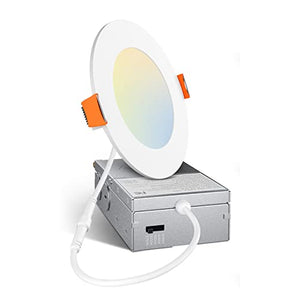
Modern canless LED recessed lighting has simplified installation considerably. Unlike older can-style housings that required bulky metal cans above the ceiling, canless units are thin wafer-style fixtures that fit into much shallower ceiling cavities. This makes recessed lighting accessible in spaces where traditional recessed cans were impossible to install. Canless designs also eliminate the need for separate trim installation — the integrated LED module and trim function as a single, unified unit.
Side-by-Side Comparison: Flush Mount vs Recessed for Low Ceilings
Before diving into the nuances of each category, it helps to see how these two fixture types stack up across the factors that matter most for low-ceiling applications:
- Ceiling Clearance Used: Flush mount — none below ceiling; Recessed — none below ceiling, but requires space above
- Installation Complexity: Flush mount — low (replaces existing box); Recessed — moderate (requires cutting holes and ceiling access)
- Light Distribution: Flush mount — wide, diffused spread from a central point; Recessed — directional, focused downward in multiple spots
- Aesthetic: Flush mount — visible fixture, adds design element; Recessed — invisible fixture, maximally clean ceiling
- Flexibility: Flush mount — single fixture per location; Recessed — multiple fixtures create layered, even coverage
- Cost (per fixture): Flush mount — generally lower upfront; Recessed — slightly higher, but multiple units needed for same coverage
Both options genuinely work for low ceilings — the best choice depends on your ceiling construction, desired aesthetic, and how much lighting control you want over the room.
Aesthetics and Room Design
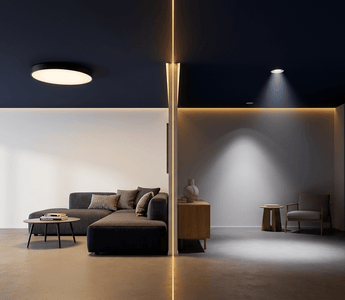
From a design standpoint, flush mount ceiling lights and recessed lights create very different visual effects. A flush mount fixture is a deliberate design element — it occupies visual space on the ceiling and becomes part of the room's character. Done well, a quality flush mount with a modern profile can serve as a quiet focal point without calling too much attention to itself. Done poorly, an oversized or dated flush mount can make a small room feel cluttered from above.
Recessed lighting, by contrast, essentially disappears into the ceiling. When done well, a grid of recessed lights creates an almost architectural effect — the room looks lit but the source is invisible, which many designers prefer for contemporary and minimalist interiors. For low ceilings specifically, this invisibility can work in your favor: the ceiling looks uncluttered, which preserves the perception of vertical space. The tradeoff is that recessed lighting requires more planning and a larger upfront installation effort to achieve even coverage.
Installation Differences
Installation is where these two fixture types diverge most significantly. A flush mount ceiling light replaces any existing ceiling fixture with minimal effort. You turn off the breaker, remove the old fixture, connect the new one to the existing electrical box using Push-in Wire Connectors — inserting the stripped wire ends into the connector ports until they click with no twisting required — and mount the fixture plate. Most flush mount installations take under an hour even for a first-timer. This reliability of connection is a meaningful advantage over traditional wiring methods.
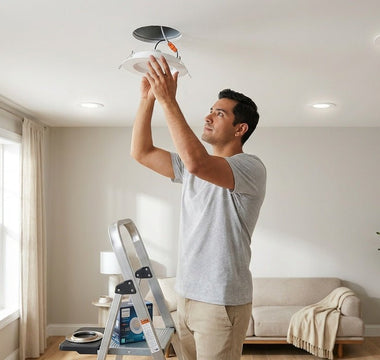
Recessed lighting installation is more involved. Each fixture requires its own hole cut into the drywall, and the fixtures must be wired in a parallel connection back to the power source, ensuring each light receives independent, full-voltage power. Canless recessed units like Amico's 4-inch canless LED recessed lights have simplified this significantly — they clip directly into the ceiling hole with spring clips and require no housing above. Still, planning the layout, cutting multiple holes, and routing wiring through ceiling cavities takes more time and confidence. For low ceilings specifically, the ceiling cavity depth is worth confirming before purchase; most canless units need only 2 to 4 inches above the drywall, but you should measure your specific ceiling structure first.
Light Output and Distribution
Light distribution is one of the most practically important differences between these two fixture types. A single flush mount ceiling light typically emits a wide, diffused spread of light from a central point — like a sun in miniature. This works beautifully in smaller rooms like bathrooms, hallways, and closets where one centrally placed fixture can cover the entire space without creating harsh shadows or dark corners. For bedrooms and living spaces, a flush mount's even ambient glow provides comfortable general illumination without the complexity of multiple fixtures.
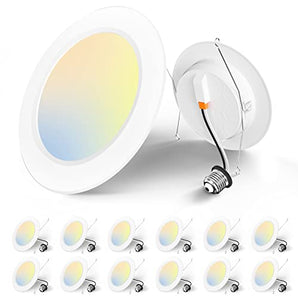
Recessed lighting is directional by nature. A single recessed light casts a cone of light downward, which means one fixture alone leaves much of the room in relative dimness. The real strength of recessed lighting comes from using multiple fixtures in a planned layout — typically spaced four to six feet apart depending on the fixture size and beam angle. Multiple 6-inch recessed LED lights arranged thoughtfully across a ceiling can produce remarkably even, shadow-free ambient lighting. For task areas like kitchen counters or reading nooks, recessed lights can also be positioned to direct light exactly where it's needed. Gimbal-style recessed fixtures take this further — adjustable gimbal recessed lights can be angled to highlight artwork, cabinets, or architectural features even in low-ceiling rooms.
Cost Considerations
On a per-fixture basis, flush mount ceiling lights are typically the more budget-friendly option. A single quality LED flush mount can light a moderate-sized room, keeping both the fixture cost and installation labor minimal. Recessed lighting, while often similarly priced per unit, requires multiple fixtures to achieve the same coverage, so the total cost — fixtures plus installation time — is usually higher. That said, recessed lighting's ability to create precise, layered illumination can reduce the need for supplemental lamps and secondary fixtures, which partially offsets the higher upfront investment.
Energy costs are broadly comparable between modern LED versions of both fixture types. Amico's LED flush mount and recessed fixtures both offer high energy efficiency with a CRI 80+ rating for accurate, natural-looking color rendering, and lifespans of 50,000+ hours that make long-term operating costs minimal. ETL and FCC certified, Amico's fixtures meet rigorous safety and performance standards — giving homeowners and contractors peace of mind alongside the performance benefits.
When to Choose Each Option
The best choice between flush mount and recessed lighting for a low ceiling ultimately comes down to a few straightforward factors. Use this as your decision guide:
Choose Flush Mount Ceiling Lights When:
- You're replacing an existing ceiling fixture and want a simple, clean swap
- The room is small to medium in size and one central fixture will cover the space
- You want to add a subtle design element without heavy renovation work
- Ceiling cavity space above the drywall is unknown or limited
- Budget favors a single-fixture solution
Choose Recessed Lighting When:
- You want a completely clean, uncluttered ceiling that maximizes the perception of vertical space
- The room is larger and requires even light distribution from multiple points
- You're doing a renovation or new construction where ceiling wiring is accessible
- You want to combine ambient lighting with directional task or accent lighting
- The interior aesthetic is modern or minimalist, where visible fixtures feel out of place
For hallways, laundry rooms, and small bedrooms, a flush mount ceiling light is almost always the practical winner. For open-plan living areas, kitchens with low ceilings, or any space where you want the ceiling to visually recede, recessed lighting earns its extra installation effort.
Amico Lighting Solutions for Low Ceilings
Amico offers a well-rounded lineup of LED lighting options designed to perform in exactly these kinds of practical, real-world applications. For homeowners leaning toward recessed lighting, Amico's 4-inch canless LED recessed lights are a strong starting point for tighter spaces, while 6-inch recessed LED options provide broader coverage for larger low-ceiling rooms. For spaces where directional control matters, Amico's gimbal recessed lights allow precise aiming without adding any fixture bulk below the ceiling plane.
Amico also offers a range of LED flat panel lights that function as a hybrid solution — surface-mounted panels that deliver wide, even illumination similar to recessed lighting but with flush-style installation. These are especially effective in commercial spaces, offices, and utility rooms with low drop ceilings. All Amico fixtures carry ETL and FCC certifications, include 2- to 5-year warranties, and ship free sitewide. Contractors and builders sourcing fixtures for larger projects can take advantage of Amico's bulk sales program for tiered volume discounts.
Final Verdict
For low ceilings, both flush mount ceiling lights and recessed lighting can be excellent choices — the decision comes down to your ceiling structure, room size, aesthetic goals, and how much installation effort you're willing to take on. Flush mount fixtures win on simplicity, upfront cost, and ease of replacement, making them ideal for smaller spaces and straightforward upgrades. Recessed lighting wins on visual cleanliness, flexible coverage, and design versatility, making it the preferred choice for larger rooms or renovations where a truly seamless ceiling is the goal.
The good news is that you don't have to overthink it. With modern canless recessed technology and slim-profile LED flush mount designs, either path leads to a bright, energy-efficient result that looks great and preserves every inch of your limited ceiling height. Focus on the room's size, how accessible the ceiling cavity is, and the look you're after — and the right choice will be clear.
Outfitting Multiple Rooms or a Full Project?
Amico's bulk sales program is built for contractors, builders, and property managers who need reliable LED fixtures at volume pricing. Get tiered discounts, dedicated support, and fast free shipping on every order.
Request a Wholesale Quote