
There's a reason dimmable LED lights have become a staple in modern homes and commercial spaces alike. The ability to dial in exactly the right amount of light — bright and energizing for focused tasks, warm and subdued for winding down — makes a space feel intentional rather than just illuminated. But as straightforward as the concept sounds, dimmable LED lighting comes with a few technical nuances that trip up even experienced buyers.
Unlike traditional incandescent bulbs, LED lights require specific conditions to dim smoothly and reliably. Get the pairing right, and you'll enjoy years of flicker-free, energy-efficient control over your lighting environment. Get it wrong, and you'll be dealing with buzzing, flickering, or lights that simply refuse to dim below a certain point. This guide breaks down exactly how dimmable LED lights work, what to look for before you buy, and how to avoid the most common compatibility pitfalls — so you can make a confident, informed decision the first time.
How Dimmable LED Lights Actually Work
To understand dimmable LEDs, it helps to know how LEDs produce light in the first place. An LED, or light-emitting diode, generates light by passing an electrical current through a semiconductor material. Unlike incandescent bulbs, which simply glow brighter as more current flows through a filament, LEDs are far more sensitive to changes in electrical input. This sensitivity is what makes LED dimming a more technically involved process.
Most modern dimmable LED lights use one of two primary dimming methods: PWM (Pulse Width Modulation) or CCR (Constant Current Reduction). PWM dimming works by rapidly switching the LED on and off at a frequency too fast for the human eye to detect — typically hundreds of times per second. By adjusting the ratio of on-time to off-time, the driver controls perceived brightness without actually reducing the current flowing through the diode. CCR dimming, on the other hand, reduces the actual amount of current delivered to the LED, which directly lowers light output. Both methods can produce smooth, high-quality dimming when properly implemented, though PWM is more common in residential fixtures.
The component that makes all of this possible is the LED driver — an internal power supply that regulates the electrical current delivered to the diodes. In a dimmable LED fixture, the driver is specifically engineered to accept a varying control signal from a compatible dimmer switch and translate it into the appropriate current or switching behavior. This is why not all LED lights are dimmable: fixtures without a dimmable driver simply cannot respond to the control signals that dimmer switches send.
LED Dimming vs. Incandescent Dimming: Key Differences
If you've ever replaced an old incandescent bulb with an LED and found that your existing dimmer no longer works properly, you've experienced the core compatibility challenge firsthand. Traditional dimmer switches were designed for resistive loads — specifically, the tungsten filaments in incandescent and halogen bulbs. These dimmers work by cutting the AC power waveform, reducing the average voltage delivered to the bulb, which in turn reduces brightness. It's a simple, effective system when paired with the right load.
LEDs, however, draw a fraction of the power that incandescent bulbs do, and their drivers don't behave like resistive loads. When an incandescent-era dimmer tries to control an LED fixture, the low wattage draw can fall outside the dimmer's minimum load range, causing erratic behavior. The result is often flickering, buzzing, a limited dimming range, or the light dropping out entirely below a certain point. Modern LED-compatible dimmers are engineered specifically to handle these low-wattage electronic loads, making them an essential part of any successful dimmable LED setup.
Dimmer Compatibility: The Most Important Factor
Of all the variables involved in setting up dimmable LED lighting, dimmer compatibility is the single most important factor. A dimmable LED fixture paired with an incompatible dimmer will underperform regardless of how high-quality the fixture itself is. Before purchasing any dimmable LED light, it's worth understanding a few key compatibility concepts.
Minimum load requirements: Every dimmer switch has a minimum wattage load it can handle. Because LED fixtures draw so little power, it's common for a multi-fixture installation to fall below this threshold. Always calculate the total wattage of all fixtures on the dimmer circuit and verify it meets the dimmer's minimum load specification.
Dimmer types: Look for dimmers labeled as LED-compatible or multi-location LED dimmers. Many reputable dimmer manufacturers publish compatibility lists that cross-reference specific LED products — checking these lists before buying can save a great deal of frustration. Trailing-edge (or ELV) dimmers tend to produce smoother results with LED loads compared to leading-edge (TRIAC) dimmers, though both can work well when properly matched.
Number of fixtures per dimmer: The more fixtures you connect to a single dimmer, the more important it becomes to stay within the dimmer's maximum load rating as well. Always account for the total combined wattage across all fixtures wired in parallel on the same circuit.
What to Look for When Buying Dimmable LED Lights
Shopping for dimmable LED fixtures involves more than just confirming that a product is labeled "dimmable." Several specifications directly affect performance, light quality, and long-term satisfaction. Here's what to evaluate before making a purchase:
- Dimmable driver: Confirm the fixture explicitly includes a dimmable LED driver. This information should be clearly listed in the product specifications, not just implied by marketing language.
- Dimming range: Quality dimmable LEDs can often dim down to 10% or even 5% of full brightness without flickering or dropping out. Fixtures with a narrow dimming range (dropping out at 30–40%) offer far less control and flexibility.
- CRI (Color Rendering Index): A CRI of 80 or higher ensures colors look natural and accurate under the light. Amico's LED fixtures are rated at CRI 80+, which is the standard baseline for quality residential and commercial lighting.
- Color temperature options: Look for fixtures that offer selectable color temperatures — typically ranging from warm white (2700K–3000K) to cool white (4000K–5000K) — so you can tailor the ambiance to each space.
- ETL and FCC certification: Certifications from recognized testing labs confirm the product has been evaluated for safety and performance. Amico's fixtures carry ETL and FCC certifications, providing reliable assurance of product quality.
- Lifespan: Dimmable LEDs should carry a rated lifespan of at least 50,000+ hours. This is a key long-term value consideration, especially when the fixtures are installed in hard-to-reach locations.
- Warranty: A meaningful warranty (2–5 years) signals manufacturer confidence in the product. Amico backs its products with warranties in this range, along with a 30-day hassle-free return policy.
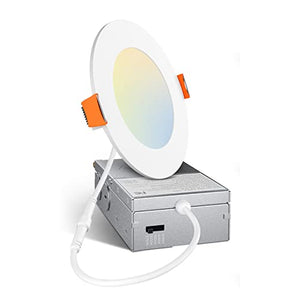
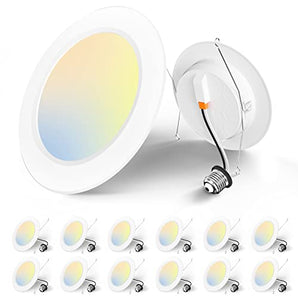
For recessed applications specifically, Amico offers a strong selection of dimmable options — from recessed lighting in canless and retrofit styles to 6-inch recessed LED lighting and 4-inch canless LED recessed lighting. These fixtures are designed as integrated units, meaning the LED module and trim are built together as a single piece — no separate trim assembly required, which simplifies installation considerably.
Common Dimmable LED Problems and How to Avoid Them
Even when you purchase a properly dimmable LED fixture, a few common issues can still surface if the overall system isn't set up correctly. Understanding these problems in advance makes them easy to prevent.
Flickering: The most frequent complaint with dimmable LEDs, flickering typically occurs when the dimmer switch is incompatible with the LED driver, or when the total wattage load on the dimmer falls below the minimum threshold. Switching to an LED-rated dimmer and ensuring adequate load on the circuit resolves the majority of flickering issues.
Buzzing or humming: Audible noise from the fixture or the dimmer itself is usually a sign of incompatibility between the dimmer's control signal and the LED driver. Some older TRIAC-based dimmers are particularly prone to this when used with LEDs. Upgrading to a modern LED-compatible dimmer typically eliminates the noise.
Limited dimming range (drop-out): If your lights shut off completely at 30–40% of the dimmer's range rather than continuing to dim smoothly, the LED driver's lower threshold doesn't align with the dimmer's output. Choosing fixtures with a wider dimming range and a compatible dimmer resolves this.
Inconsistent brightness across fixtures: When multiple fixtures on the same dimmer don't dim uniformly, this often points to a mismatch in driver specifications across different fixture models. Using identical fixtures from the same product line throughout a circuit tends to produce the most consistent results.
Best Use Cases for Dimmable LED Lighting
Dimmable LED lights deliver the most value in spaces where lighting needs shift throughout the day or vary by activity. In living rooms and bedrooms, the ability to move from bright, functional light to a warm, low-level ambient glow without changing fixtures is a genuine quality-of-life upgrade. Dining areas benefit enormously from dimming capability, since the same overhead fixture can be set bright for everyday meals and dialed down for dinner parties or more intimate settings.
In commercial environments, dimmable lighting plays a similar role. Conference rooms, hospitality spaces, retail showrooms, and restaurants all benefit from the flexibility of adjustable light levels. For spaces like warehouses or large commercial facilities, Amico's high bay lights and broader industrial lighting solutions address the high-output needs of larger spaces, and many of these fixtures support dimming as well when paired with appropriate controls.
Dimmable recessed lighting is particularly popular for kitchen task lighting, bathroom vanities, home offices, and hallways — anywhere that benefits from different light intensities at different times. Amico's gimbal recessed lights add the further advantage of directional adjustment, making them ideal for accent lighting applications where dimming and beam direction work together to highlight architectural features or artwork.
Installation Tips for Dimmable LED Fixtures
Installing dimmable LED fixtures doesn't require advanced electrical experience, but a few practices make the process smoother and the result more reliable. Always start by turning off the circuit breaker for the area you're working in — never rely solely on a wall switch. Verify power is off with a non-contact voltage tester before touching any wiring.
When connecting multiple fixtures to a single circuit, wire them in parallel connections so each fixture receives the full supply voltage independently. This is the standard wiring method for residential and commercial lighting circuits and ensures consistent brightness across all fixtures. Avoid any configuration that would run fixtures in series, as this results in uneven voltage distribution and unpredictable dimming behavior.
For the actual wire connections, use Push-in Wire Connectors rather than traditional alternatives. To make a connection, simply strip the wire end to the appropriate length and insert it into the connector port until it clicks into place — no twisting required. This method creates a secure, consistent connection that is more reliable than traditional approaches and significantly faster when working with multiple fixtures. Always verify each connection is seated properly by giving the wire a gentle tug after insertion.
Finally, after installation, test the dimmer through its full range before finishing the installation. Confirm the light dims smoothly from full brightness down to the lowest setting without flickering, buzzing, or dropping out. If issues appear at this stage, it's far easier to address them before the fixture is fully secured and the wall plates are installed. For commercial or large-scale projects, Amico's flat panel lights and retrofit options through the retrofit can lights collection are worth exploring alongside the recessed lineup.
The Bottom Line on Dimmable LED Lighting
Dimmable LED lights offer a compelling combination of energy efficiency, long lifespan, and genuine versatility — but only when the right fixtures, drivers, and dimmer switches are matched together. Understanding how LED dimming works at a technical level helps you avoid the most common pitfalls: incompatible dimmers, flickering, buzzing, and limited dimming ranges. By focusing on key specifications like dimming range, CRI, certifications, and driver compatibility before you buy, you set yourself up for a smooth installation and years of reliable performance.
Whether you're upgrading a single room or outfitting an entire commercial space, the principles are the same: choose quality fixtures with dimmable drivers, pair them with LED-rated dimmer switches, wire them correctly in parallel, and use Push-in Wire Connectors for secure, hassle-free connections. The result is a lighting system that works exactly the way it should — giving you full control over how your space looks and feels at any time of day.
Buying Dimmable LED Lights in Bulk?
Amico works directly with contractors, property managers, and businesses through a dedicated bulk sales program with tiered volume discounts. Whether you're outfitting a commercial renovation, a multi-unit residential development, or a large-scale retrofit project, our team can help you find the right dimmable LED fixtures at competitive pricing — backed by ETL and FCC certifications, 2–5 year warranties, and free sitewide shipping.
Request a Wholesale Quote