
There's a moment most homeowners know well: you finally swap out your old incandescent bulbs for LEDs, install what looks like a perfectly good dimmer switch, and then flip it on — only to watch your lights strobe like a budget nightclub. Frustrating doesn't quite cover it.
The truth is, not all dimmer switches are created equal, and LED lighting has its own set of rules. The wrong dimmer can cause flickering, buzzing, limited dimming range, or even shorten the life of your fixtures. The right one, however, delivers silky-smooth light control that transforms the feel of any room — from a bright, task-ready kitchen to a warm, relaxed living space with a single touch.
In this guide, we break down the best LED dimmer switches available in 2026, explain exactly what to look for before you buy, and share practical installation tips to help you get flicker-free dimming from day one. Whether you're upgrading a single bedroom switch or outfitting an entire home, this guide has everything you need to make the right call.
Best LED Dimmer Switches: Flicker-Free Dimming Made Simple
Everything you need to choose, install, and enjoy smooth LED dimming — at a glance
LED Dimmers Are Not Interchangeable with Incandescent Dimmers
LEDs use internal drivers that require specifically rated dimmer switches. Using an old incandescent dimmer causes flickering, buzzing, and can shorten fixture lifespan.
Match Your Dimmer to Your Circuit Configuration
Single-pole dimmers control one location; 3-way dimmers handle two-switch setups like staircases. Buying the wrong type means a return trip to the store.
The Dimmer and Fixture Work as a System
Even the best dimmer can't fix a poorly designed LED driver. Pairing a quality dimmer with quality, explicitly dimmable fixtures is what delivers truly smooth performance.
Smart Dimmers Offer Real Value — But Check Your Wiring First
Scheduling, voice control, and scene automation are genuinely useful — but many smart dimmers require a neutral wire. Verify your wall box before purchasing.
Always Verify Load Range — Both Max and Minimum
Too few fixtures on a dimmer causes instability at low dim levels. Your total fixture wattage must fall within the dimmer's minimum and maximum load range.
Amico 300W LED Dimmer (Single-Pole / 3-Way Universal)
No neutral wire required · Single-pole & 3-way in one unit · Universal LED compatibility · Wall plate & screws included
Works Without a Neutral Wire
Installs in wall boxes that lack a neutral — common in pre-1980s homes where most smart dimmers can't go
Staircases, Hallways & Large Rooms
One unit handles both single-pole and 3-way circuits — no need to guess which SKU to buy
LED, CFL & Incandescent
Smooth, flicker-free dimming for up to 300W of dimmable LED/CFL bulbs, or up to 600W of incandescent/halogen bulbs
Everything in the Box
Wall plate & screws included · Standard single-gang fit · Clear wiring diagram for fast installs
Non-Dimmable Fixture
Fixture has no dimming driver — it can't be dimmed regardless of the switch
Voltage Fluctuation
Grid voltage swings or harmonic interference disturb sensitive LED drivers
Uneven Parallel Load
Mismatched fixtures wired in parallel split the load unevenly across the dimmer
Poor LED Driver
Budget fixtures with low-quality internal drivers flicker even with good dimmers
Loose Wiring
Intermittent electrical contact — check connections before replacing hardware
Why LED Dimmer Switches Matter More Than Ever
The shift to LED lighting has been one of the most significant changes in residential and commercial lighting in decades. LEDs consume up to 80% less energy than incandescent bulbs, last 50,000+ hours under normal use, and produce far less heat. But that efficiency comes with a catch: LEDs don't behave like incandescent bulbs when dimmed, and the dimmer switch you use matters enormously.
Traditional incandescent dimmers work by reducing the voltage flowing to the bulb, which naturally dims the filament. LEDs, however, use internal drivers to regulate current, and an incompatible dimmer can interfere with that process in ways that create visible flicker, audible buzz, or a frustratingly narrow dimming range. A quality LED-compatible dimmer switch isn't just a convenience — it protects your fixtures and delivers the lighting experience you actually paid for.
How LED Dimmer Switches Actually Work
Most residential LED dimmer switches use a technology called TRIAC dimming (also called phase-cut dimming). They work by rapidly switching the power supply on and off many times per second — so fast that the human eye perceives it as a smooth reduction in brightness rather than a flicker. When a dimmer and LED driver are well-matched, the result is seamless. When they're mismatched, that rapid switching becomes visible as flicker or causes the driver to buzz.
Higher-end dimmers increasingly use trailing-edge (reverse phase) dimming, which is gentler on LED drivers and tends to produce smoother, quieter performance — especially at the low end of the dimming range. For most residential applications, a quality leading-edge TRIAC dimmer that's explicitly rated for LED use will perform excellently. For commercial applications or larger installations, trailing-edge models are worth the investment.
What Causes LED Flickering (And How to Avoid It)
LED flickering is one of the most common complaints among homeowners who have upgraded their lighting. It's almost always caused by one of three things: an incompatible dimmer switch, a low-quality LED driver inside the fixture, or an overloaded circuit. Understanding the root cause is the first step to eliminating it.
Here's a quick breakdown of the most common culprits:
- Incompatible dimmer: Using an old incandescent dimmer with LED bulbs is the number-one cause of flicker. Always use a dimmer explicitly rated for LED loads.
- Under-loaded dimmer: Most LED dimmers have a minimum load requirement. Running too few fixtures on a single dimmer can cause instability at the low end of the range.
- Poor-quality LED drivers: Budget LED bulbs or fixtures with low-quality internal drivers are more susceptible to flicker even with a good dimmer. This is why fixture quality matters just as much as switch quality.
- Loose wiring connections: Intermittent electrical contact can cause flicker that has nothing to do with the dimmer itself. Secure, reliable wire connections are essential.
- Voltage fluctuations: Grid-level voltage changes, particularly in older homes, can contribute to visible flicker in sensitive LED systems.
The simplest fix in most cases is to replace the dimmer with an LED-rated model and ensure your fixtures use quality drivers. If flicker persists, check your wiring connections before assuming the worst about your electrical system.
Key Features to Look for in an LED Dimmer Switch
Shopping for a dimmer switch feels deceptively simple until you're standing in the electrical aisle staring at a wall of nearly identical white rectangles. These are the features that actually separate a good LED dimmer from a great one.
- LED/CFL compatibility rating: Always verify the dimmer is explicitly rated for LED loads. This information should be printed clearly on the packaging and in the product specs.
- Wattage range: Check both the minimum and maximum load ratings. The dimmer must handle at least your total fixture wattage, and your fixture wattage must exceed the dimmer's minimum load threshold.
- Dimming range: A wider dimming range (e.g., 10%–100%) gives you more flexibility. Some budget dimmers bottom out at 30–40%, which severely limits your ability to create truly ambient light levels.
- Dimmer type: Decide between slider, rotary, touch-sensitive, or smart/app-controlled models based on your preference and use case.
- Single-pole vs. 3-way: Confirm which configuration your wall box requires before purchasing.
- Smart home integration: If you're building a connected home, look for compatibility with Alexa, Google Home, or Apple HomeKit.
- Certification: Look for ETL or similar safety certifications to ensure the product meets North American electrical standards.
Top LED Dimmer Switch Picks for 2026
Our top recommendation for 2026 is Amico's 300W LED Dimmer Switch — a single universal unit that solves the most common installation headaches across the most common dimmer use cases. Below, we break down why it's the right fit across single-pole, 3-way, budget-conscious, and commercial scenarios.
Best Overall: Amico 300W LED Dimmer Switch (Single-Pole / 3-Way Universal)
Amico's 300W LED dimmer earns the top spot because it quietly solves the most common installation headaches homeowners run into. It's a true single-pole / 3-way universal — the same unit covers one-location switches and two-switch staircase or hallway setups, so you don't have to worry about buying the wrong type. No neutral wire is required, which is a meaningful advantage in older homes where the wall box only has hot, load, and ground. It handles dimmable LED and CFL loads up to 300W, or incandescent and halogen loads up to 600W, with smooth low-end dimming and minimal flicker, and the box ships with the matching white wall plate and screws so the install is genuinely plug-and-play. For real-world fixture pairings — including Amico's own recessed downlights, flat panels, and high bay LEDs — check the Amico LED dimmer compatibility database before you buy.
Best for Budget Installations
The Amico 300W LED dimmer is competitively priced for what you get — a universal single-pole / 3-way unit with the matching wall plate and mounting screws included in the box. Because the same dimmer covers both circuit configurations, you don't have to guess at the store and you don't end up with leftover packs of the wrong type. For budget-conscious projects spanning multiple rooms, buying one model that works everywhere is the simplest way to keep total project cost down without sacrificing dimming quality. Cross-reference the Amico LED dimmer compatibility database to confirm fit with your existing fixtures before ordering in volume.
If You Want Smart Features
If lighting schedules, voice control, or app-based scenes are central to your setup, you'll want a Wi-Fi or hub-connected smart dimmer — and you'll need a neutral wire in your wall box to install one. Smart dimmers add genuine value for automation-heavy households, but they also bring firmware updates, network dependencies, and a higher price tag. For most homes — especially older homes without a neutral wire — a quality conventional LED dimmer like Amico's 300W universal model delivers smoother, more reliable dimming with fewer ongoing variables to manage.
For Commercial Installations
Commercial spaces — conference rooms, retail displays, restaurant dining areas, or warehouse floors — often benefit from multi-location control and trailing-edge dimming for higher load ranges. For projects of this scale, pair your dimmer choice with commercial-grade fixtures like Amico's flat panel lights or high bay lights, and consult the Amico LED dimmer compatibility database for tested switch-and-fixture combinations before specifying the install.
Best for 3-Way Circuits
For staircases, hallways, or large rooms with multiple switch points, Amico's 300W universal dimmer handles 3-way wiring out of the box — the same unit that works for single-pole installations. There's no separate 3-way SKU to source, no companion-switch matching to worry about, and the dimming experience stays consistent whether you control the lights from one location or two. The wall plate and screws are included, so the finished install looks clean without a separate trip to the hardware aisle.
Single-Pole vs. 3-Way Dimmer Switches: Which Do You Need?
This is one of the most common points of confusion when shopping for a dimmer switch, and getting it wrong means a return trip to the store. A single-pole dimmer controls a fixture from one location — one switch, one light (or set of lights). It's the most common type and the easiest to install. If your current switch has two black wires and a bare ground, you almost certainly have a single-pole setup.
A 3-way dimmer is used when two switches control the same fixture — think of a staircase light controlled from both the top and bottom of the stairs, or a living room with switches on opposite ends. In this setup, one switch is a dimmer and the other is a compatible companion (or add-on) switch. Both switches must be rated for the same system. If you see three colored wires plus a ground in your current switch box, you're likely dealing with a 3-way circuit.
Smart Dimmer Switches: Are They Worth It?
Smart dimmers have moved from novelty to genuinely useful home technology in the past few years, and the price gap between smart and conventional options has narrowed considerably. The real question isn't whether they're impressive — it's whether the added functionality fits your lifestyle and setup.
The case for going smart is compelling if you want to automate lighting schedules, sync lights to sunrise and sunset, control fixtures from your phone while away from home, or create room-by-room lighting scenes for movie nights, dinner parties, or morning routines. For families with mixed needs — some members wanting lights off at bedtime, others needing them on later — scheduled automations are genuinely life-improving.
The case for sticking with conventional dimmers is equally valid if you're on a budget, if your home's wiring doesn't include a neutral wire (required by many smart dimmers), or if you simply prefer the reliability and simplicity of a physical switch. A high-quality conventional LED dimmer like Amico's 300W universal model will outlast most trends and never need a firmware update.
Installation Tips for LED Dimmer Switches
Installing a dimmer switch is well within the reach of most homeowners comfortable with basic electrical work. Always turn off the breaker before opening any switch box and verify the power is off with a non-contact voltage tester before touching any wires. Beyond that, the process is straightforward — but a few details make the difference between a clean install and a frustrating one.
- Turn off the breaker and confirm power is off – Use a non-contact voltage tester on the wires in the box before proceeding. Never assume the power is off just because you flipped the switch.
- Document your existing wiring – Take a clear photo of the current switch and its wire connections before disconnecting anything. This makes referencing the original setup easy if you run into questions mid-install.
- Use Push-in Wire Connectors – When joining wires, use Push-in Wire Connectors rather than older twist-on alternatives. Simply insert the stripped wire ends into the connector ports until they click into place — no twisting required. This method creates a more reliable, vibration-resistant connection and speeds up the installation significantly.
- Set the low-end trim if available – Many quality LED dimmers include an internal trim adjustment that lets you set the minimum brightness level. Adjust it until the lights dim smoothly to the lowest level without flickering or dropping out completely.
- Test before closing the box – Turn the breaker back on and test the full dimming range before securing the switch in the wall. It's much easier to adjust wiring before the switch is buttoned up.
Pairing Your Dimmer with the Right LED Fixtures
Even the best dimmer switch can't compensate for LED fixtures with poorly designed drivers. The fixture and the dimmer work as a system, and pairing a quality dimmer with a quality fixture is what delivers truly smooth, flicker-free performance. This is especially important in rooms where you'll use the full range of the dimmer frequently — bedrooms, dining rooms, and living spaces where ambiance matters.
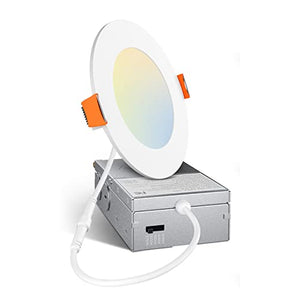
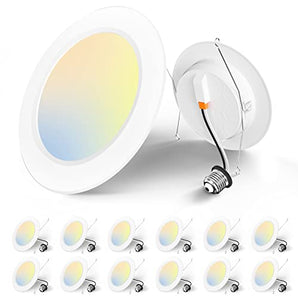
For recessed lighting, look for fixtures that are explicitly listed as dimmable and that carry the manufacturer's dimmer compatibility list — Amico publishes a full LED dimmer compatibility database covering tested switch-and-fixture pairings. Amico's 4-inch canless LED recessed lighting and 6-inch recessed LED lighting are engineered for smooth dimming performance, with ETL and FCC certified drivers that work reliably with leading LED-compatible dimmer brands. Their integrated retrofit units — where the LED module and trim are built as a single piece — eliminate the compatibility headaches that come with mixing separate components, and with a rated lifespan of 50,000+ hours, they're built to outlast the dimmer switches they're paired with.
If you're installing dimmable lighting in a larger space, Amico's flat panel lights are another strong pairing option for commercial-style installations. For high-ceiling environments like warehouses or gyms, their high bay lights are designed for demanding applications where consistent, reliable output is essential. Across all categories, Amico fixtures deliver CRI 80+ color accuracy, which means colors render naturally and accurately across the full dimming range — not just at full brightness.
When wiring multiple fixtures to a single dimmer circuit, always connect them in parallel rather than in series. Parallel wiring ensures each fixture receives the full line voltage independently, which is essential for consistent dimming performance and correct load balancing across the circuit.
Frequently Asked Questions
Can I use any dimmer switch with LED lights?
No. Standard incandescent dimmers are not compatible with most LED fixtures and will cause flickering, buzzing, or reduced lifespan. Always use a dimmer switch that is explicitly rated for LED loads and verify compatibility with your specific fixtures using the manufacturer's compatibility list when available.
Why does my LED light flicker even with a new dimmer?
If flickering persists after installing an LED-rated dimmer, the most common causes are an under-loaded circuit (too few fixtures for the dimmer's minimum load), a low-quality LED driver inside the fixture, or a loose wiring connection. Try adding more fixtures to the circuit, adjusting the low-end trim on the dimmer, or checking all wire connections for a secure fit.
Do smart dimmer switches work with all LED fixtures?
Not automatically. Smart dimmers still have LED load ratings and compatibility requirements just like conventional dimmers. Always verify that your LED fixture is listed as compatible with the specific smart dimmer model you're installing. Most major brands publish detailed compatibility lists on their websites.
What is the difference between single-pole and 3-way dimmer switches?
A single-pole dimmer controls a fixture from one location only. A 3-way dimmer is part of a two-switch system that controls the same fixture from two different locations. Installing the wrong type will result in the switch not functioning correctly, so always identify your circuit configuration before purchasing.
How many LED fixtures can I connect to one dimmer switch?
It depends on the dimmer's maximum wattage rating and the wattage of your individual fixtures. Divide the dimmer's maximum wattage by the wattage of each fixture to get the maximum number. Always stay within the dimmer's load range and ensure your total fixture wattage also exceeds the dimmer's minimum load requirement to prevent instability at low dim levels.
The Bottom Line
Choosing the right LED dimmer switch comes down to three things: compatibility with your fixtures, the right switch configuration for your circuit, and a build quality that delivers reliable performance over time. Whether you go with a proven conventional dimmer for everyday simplicity or a feature-packed smart switch for full home automation, the upgrade from an old incandescent dimmer is well worth it — in comfort, energy savings, and the simple pleasure of lighting that actually does what you want it to do.
Just as important as the dimmer you choose is the quality of the LED fixtures you pair it with. Fixtures engineered for smooth dimming compatibility, with robust drivers and long-rated lifespans, make every dimmer perform better. If you're planning a lighting upgrade — whether it's a single room refresh or a full home renovation — starting with the right fixtures sets the foundation for everything else.
Explore Amico's full range of dimmable recessed lighting, flat panel lights, and high bay lights — all ETL and FCC certified, backed by a 30-day hassle-free return policy and free sitewide shipping.
Outfitting a Commercial or Multi-Unit Project?
Amico offers a bulk sales program with tiered volume discounts for contractors, builders, and businesses. Get a personalized quote for your project and find out how much you can save on dimmable LED fixtures at scale.
Request a Wholesale Quote