Table Of Contents
- Understanding the Basics: 4-Inch vs 6-Inch Recessed Lights
- Light Output and Coverage Comparison
- How Ceiling Height Influences Your Choice
- Room-by-Room Recommendations
- Spacing and Layout Guidelines
- Installation Considerations
- Can You Mix 4-Inch and 6-Inch Lights?
- Cost and Energy Efficiency Factors
- Making Your Final Decision
Recessed lighting can transform any space with clean, modern illumination, but choosing the right fixture size makes all the difference between a well-lit room and a lighting scheme that misses the mark. The debate between 4-inch and 6-inch recessed lights isn't just about aesthetics—it directly impacts light coverage, energy consumption, installation requirements, and the overall atmosphere of your space.
Whether you're renovating a cozy bathroom, designing a spacious living room, or upgrading commercial spaces, understanding the practical differences between these two popular sizes will help you create a lighting plan that delivers both function and style. While 4-inch fixtures offer focused, accent-style lighting ideal for tighter spaces, 6-inch lights provide broader illumination perfect for general ambient lighting. The right choice depends on your ceiling height, room dimensions, intended use, and personal preferences.
In this comprehensive guide, we'll break down everything you need to know about 4-inch versus 6-inch recessed lights—from light output and spacing requirements to room-specific recommendations and installation tips. By the end, you'll have the clarity to select the perfect size for your project with confidence.
4-Inch vs 6-Inch Recessed Lights
Quick comparison guide to help you choose the right size
Accent & task lighting
General ambient lighting
Choose 4-Inch Lights When:
Choose 6-Inch Lights When:
Room-by-Room Quick Guide
Spacing Guidelines by Ceiling Height
6": 4-5 ft apart
6": 5-6 ft apart
5-7 ft apart
Pro Tip: Mix Both Sizes
Use 6-inch for ambient lighting and 4-inch for accent/task lighting in the same space for optimal layered illumination and visual interest.
Always choose ETL-certified fixtures with CRI 80+ for quality illumination and 50,000+ hour LED lifespan for long-term reliability.
Understanding the Basics: 4-Inch vs 6-Inch Recessed Lights
The numbers refer to the diameter of the fixture's opening, which directly affects both the appearance and performance of your recessed lighting. A 4-inch fixture creates a smaller, more discreet ceiling opening, while a 6-inch light has a larger aperture that allows more light to escape into the room. This fundamental difference shapes how each size functions in real-world applications.
4-inch recessed lights typically work best as accent lighting, task lighting, or supplemental illumination in smaller spaces. Their compact size makes them less visually intrusive, which appeals to homeowners seeking a minimalist aesthetic. These fixtures excel at creating focused pools of light rather than broad, even coverage across large areas. With modern LED technology, even these smaller fixtures can deliver impressive brightness levels—often ranging from 650 to 1,000 lumens depending on the model.
6-inch recessed lights serve as workhorses for general ambient lighting. The larger opening allows for greater light distribution, making them ideal for primary lighting in living rooms, kitchens, and commercial spaces. These fixtures typically produce between 1,000 and 1,500 lumens, providing substantial illumination from fewer fixtures. The trade-off is a more prominent ceiling presence, though many homeowners find the larger size perfectly proportional in rooms with standard 8-foot or higher ceilings.
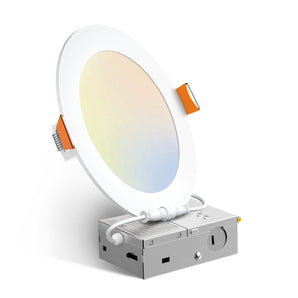
Both sizes are available in various styles including canless designs, retrofit can lights, and gimbal recessed lights that allow you to direct light where it's needed most. Quality fixtures from manufacturers like Amico feature ETL certification, CRI 80+ color accuracy for natural-looking illumination, and LED modules rated for 50,000+ hours of reliable operation.
Light Output and Coverage Comparison
Understanding how much light each size produces and how far that light spreads is essential for proper lighting design. The relationship between fixture size, lumen output, and coverage area determines how many lights you'll need and how effectively they'll illuminate your space.
Lumen Output Differences
While lumen output depends more on the LED module than the fixture size itself, 6-inch fixtures generally accommodate higher-wattage LEDs and produce more light. A typical 4-inch canless LED recessed lighting fixture outputs between 650-1,000 lumens, which equals approximately 65-75 watts of incandescent lighting. In contrast, 6-inch recessed LED lighting commonly produces 1,000-1,500 lumens, equivalent to 85-100 watts of traditional lighting.
The practical implication is straightforward: you'll need more 4-inch fixtures to achieve the same brightness level as fewer 6-inch lights. For a 12x12-foot room requiring approximately 3,000 lumens of ambient light, you might need four to five 4-inch fixtures compared to just two or three 6-inch fixtures. This calculation affects both your installation time and overall project costs.
Coverage Area and Beam Spread
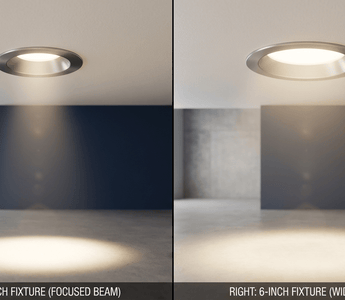
Beyond total light output, beam spread determines how that light distributes across your space. Most recessed lights use reflector designs that create a cone of light extending downward and outward from the fixture. A 4-inch light typically illuminates a circular area approximately 4-6 feet in diameter at floor level in a standard 8-foot ceiling installation. A 6-inch fixture covers roughly 6-10 feet in diameter under the same conditions.
These coverage patterns influence spacing requirements. With 4-inch fixtures, you'll generally space them 4-5 feet apart for even ambient lighting. Six-inch fixtures can be spaced 5-7 feet apart while maintaining consistent illumination. The beam angle of your specific fixture also matters—narrow flood beams (around 40 degrees) create more focused light, while wide flood beams (120+ degrees) spread illumination more broadly across the ceiling and walls.
How Ceiling Height Influences Your Choice
Ceiling height plays a surprisingly significant role in determining which fixture size will perform best. The distance between your recessed light and the surface you're illuminating directly affects both light intensity and coverage area. Understanding this relationship prevents the common mistake of choosing fixtures that either create harsh, concentrated spots or fail to provide adequate brightness.
Standard 8-foot ceilings work well with both 4-inch and 6-inch fixtures, but the choice depends on your goals. Four-inch lights on 8-foot ceilings create distinct pools of light ideal for task areas, reading nooks, or accent lighting over artwork and architectural features. Six-inch fixtures at this height provide excellent general lighting without feeling overwhelming. The larger fixtures' increased light spread compensates for the relatively short throw distance, delivering even illumination with fewer fixtures required.
9-10 foot ceilings represent the sweet spot for 6-inch recessed lighting. At these heights, the larger fixtures have enough throw distance to spread light effectively across rooms while maintaining comfortable brightness levels. Four-inch fixtures can work but may require closer spacing and higher lumen outputs to achieve the same coverage. The additional ceiling height also makes 6-inch fixtures appear more proportional, reducing any concern about ceiling openings looking too large.
Ceilings above 10 feet strongly favor 6-inch fixtures for general lighting. The increased distance between fixture and floor means light has more space to spread, but it also loses intensity following the inverse square law of light. Larger fixtures compensating with higher lumen outputs become essential. At 12-foot ceiling heights, 4-inch fixtures work best as accent lights rather than primary illumination sources, unless you're willing to install significantly more fixtures with higher outputs.
Vaulted or cathedral ceilings present unique challenges. In these applications, 6-inch fixtures almost always outperform 4-inch options due to the extreme throw distances involved. Consider fixtures with adjustable trim or gimbal capabilities that let you angle the light toward specific areas rather than simply illuminating the floor directly below. For very high ceilings above 14 feet, specialized high-output fixtures or alternative lighting solutions like pendant lights or track lighting may prove more effective than standard recessed options.
Room-by-Room Recommendations
Different spaces have different lighting needs based on their size, function, and typical activities. Here's how to choose between 4-inch and 6-inch recessed lights for specific rooms throughout your home or commercial space.
Kitchens
Kitchens demand versatile lighting that handles both general illumination and focused task lighting. Six-inch recessed lights excel as the primary lighting source, typically installed in a grid pattern across the ceiling to provide even, shadow-free illumination. Plan for fixtures every 4-6 feet for optimal coverage. For task lighting over countertops, islands, and sinks, 4-inch fixtures work beautifully when placed 12-18 inches from the wall edge, directing focused light exactly where you prep and cook. This combination approach—6-inch for ambient lighting, 4-inch for tasks—creates a layered lighting design that adapts to different activities throughout the day.
Living Rooms and Family Rooms
Six-inch fixtures are typically the better choice for living spaces where you want comfortable, even illumination without an excessive number of ceiling openings. In a typical 15x18-foot living room with 8-foot ceilings, four to six 6-inch fixtures arranged in a rectangular grid provide excellent ambient light. If your design includes accent lighting for artwork, built-in shelving, or architectural details, supplement with strategically placed 4-inch fixtures. Dimmer switches become especially valuable in living areas, allowing you to adjust brightness for different moods and activities from entertaining guests to watching movies.
Bedrooms
Bedroom lighting benefits from a softer approach since these spaces prioritize relaxation. Four-inch recessed lights create a less intrusive appearance and provide adequate illumination without the harsh brightness that larger fixtures can produce. Plan for three to four fixtures in a master bedroom, positioned to avoid placing lights directly over the bed where they might disturb sleep. For reading areas, position 4-inch fixtures approximately 16-20 inches from the wall to cast focused light onto nightstands. Consider pairing recessed lights with other lighting sources like table lamps or wall sconces for a more layered, hospitality-inspired approach.
Bathrooms
Bathroom size determines the ideal fixture choice. In compact powder rooms and guest baths, 4-inch fixtures provide ample light without overwhelming the space—typically two fixtures positioned over the vanity area are sufficient. Larger master bathrooms benefit from 6-inch fixtures for general lighting, with additional 4-inch lights for task lighting over vanities, in shower enclosures, and above bathtubs. Ensure any fixtures in wet locations carry appropriate ratings for moisture exposure. The high CRI 80+ rating found in quality LED fixtures like those from Amico proves especially valuable in bathrooms, where accurate color rendering matters for grooming tasks.
Hallways and Corridors
Narrow hallways typically measure 3-4 feet wide, making 4-inch fixtures the proportionally appropriate choice. These smaller lights provide adequate illumination without visually cluttering narrow ceiling spaces. Space fixtures approximately 6-8 feet apart running down the center of the hallway. In wider corridors found in commercial buildings or luxury homes, 6-inch fixtures spaced 8-10 feet apart deliver better coverage. For very long hallways, connect multiple fixtures using parallel wiring with push-in wire connectors, which provide more reliable connections than traditional alternatives by allowing you to insert stripped wire ends into connector ports until they click securely into place.
Home Offices
Productive workspace lighting requires even, glare-free illumination that minimizes eye strain during extended computer work. Six-inch recessed lights positioned in a grid pattern deliver the consistent ambient light needed throughout the room. Avoid placing fixtures directly above monitor positions where they might create screen glare. Instead, position lights slightly forward and to the sides of the desk. For desk task lighting, add 4-inch fixtures with narrow beam angles to provide focused illumination on paperwork and keyboard areas. Target an overall light level of 50-75 foot-candles (500-750 lumens per square meter) for comfortable office work.
Basements and Garages
Utility spaces benefit from maximum light output and broad coverage, making 6-inch fixtures the practical choice. These areas often feature lower ceiling heights (7-foot ceilings are common in basements), and the larger fixtures compensate by spreading light more effectively in confined spaces. Plan for fixtures every 6-8 feet in a grid pattern. For workshops and garage work areas, supplement with additional task lighting over workbenches using either 4-inch recessed fixtures or high bay lights for industrial-grade illumination. The 50,000+ hour lifespan of quality LED fixtures proves especially valuable in these always-on utility spaces where light replacement can be inconvenient.
Spacing and Layout Guidelines
Proper spacing ensures even illumination without creating dark spots or excessive bright patches. While the specific layout depends on room dimensions and fixture type, some general principles apply to both 4-inch and 6-inch recessed lighting installations.
The fundamental spacing rule states that fixtures should be positioned at intervals roughly equal to half the ceiling height. For standard 8-foot ceilings, this translates to approximately 4 feet between fixtures. However, this guideline requires adjustment based on fixture size and lumen output. Six-inch fixtures with higher outputs can stretch to 5-6 feet spacing while maintaining even illumination. Four-inch fixtures with lower outputs might need tighter 3-4 foot spacing to avoid dark patches between light pools.
Wall washing technique positions fixtures 24-36 inches from walls to effectively illuminate vertical surfaces and make rooms feel larger. This placement prevents the shadowy perimeter effect that occurs when fixtures are too far from walls. For 6-inch fixtures, position them 30-36 inches from walls. Four-inch fixtures should sit slightly closer at 24-30 inches. When highlighting artwork or architectural features, adjust this distance based on the item's height and the effect you want to create.
Grid layouts work well for rectangular rooms where even ambient lighting is the goal. Measure your space and divide it into equal sections, placing fixtures at the intersection points. A 12x16-foot room with 6-inch fixtures might use a 3x4 grid with fixtures spaced approximately 4 feet apart. The same room with 4-inch fixtures might require a 4x5 grid with 3-foot spacing. Always start your layout measurements from the walls inward rather than centering a fixture in the room, which often creates awkward spacing at the perimeters.
Avoiding obstacles requires careful planning. Keep fixtures at least 12 inches away from ceiling fans, HVAC vents, and structural beams. When working around ceiling fan lights, position recessed fixtures in a circle around the fan rather than competing for the same ceiling real estate. Check for joists, ductwork, and wiring in the ceiling cavity before finalizing your layout—canless fixtures offer more flexibility in tight spaces since they require only 2-3 inches of clearance compared to the 6+ inches needed for traditional recessed cans.
Installation Considerations
The physical installation process differs slightly between 4-inch and 6-inch fixtures, with implications for both new construction and retrofit projects. Understanding these differences helps you plan effectively and avoid common installation pitfalls.
Ceiling cutout size represents the most obvious difference. A 4-inch fixture requires a hole approximately 4-3/8 inches in diameter, while a 6-inch fixture needs a 6-3/8 inch opening. This matters when cutting through finished ceilings—the larger hole for 6-inch fixtures provides less margin for error if you need to adjust placement due to unexpected obstructions in the ceiling cavity. The smaller 4-inch cutout offers more flexibility to shift position slightly if you encounter a joist or duct. Quality fixtures include templates or spring-loaded mounting clips that simplify the installation process regardless of size.
Clearance requirements vary by fixture design. Traditional housing-style recessed cans need 6-7 inches of clearance above the ceiling, which can be problematic in spaces with shallow ceiling cavities or insulation concerns. Modern canless designs solve this problem by requiring only 2-3 inches of clearance, making them ideal for retrofit installations where ceiling access is limited. This advantage applies equally to both 4-inch and 6-inch canless options, including Amico's integrated LED fixtures where the LED module and trim are built as a single piece that installs quickly without separate component assembly.
Wiring considerations remain consistent between sizes. When connecting multiple fixtures, always wire them in parallel connections to ensure each receives full voltage and operates independently. This method involves running separate hot, neutral, and ground wires to each fixture from the power source or previous fixture in the circuit. Use push-in wire connectors rather than traditional alternatives—simply insert stripped wire ends into the connector ports until they click securely into place without any twisting required. This connection method provides more reliable, vibration-resistant joints that won't loosen over time.
Insulation compatibility matters in both new and retrofit applications. Look for fixtures rated for direct insulation contact (IC-rated) so you don't compromise your home's energy efficiency. Quality LED fixtures like those from Amico run cool enough to safely contact insulation without creating fire hazards, unlike older incandescent recessed lights that generated dangerous heat levels. This consideration applies equally to 4-inch and 6-inch fixtures, though the larger cutout for 6-inch lights creates a slightly larger thermal break in your insulation layer.
Can You Mix 4-Inch and 6-Inch Lights?
Combining different fixture sizes in a single space or throughout a home raises aesthetic and functional questions. The short answer is yes, you can mix sizes—but success depends on thoughtful planning and clear purpose for each size.
The most effective approach uses 6-inch fixtures for ambient lighting and 4-inch fixtures for accent or task lighting. This creates a visual hierarchy where the larger fixtures provide background illumination while smaller fixtures draw attention to specific features or work areas. In a kitchen, for example, 6-inch fixtures might illuminate the overall space while 4-inch lights focus on the countertop work zones. The size difference signals different lighting purposes to the eye, making the mixed approach feel intentional rather than inconsistent.
Avoid mixing sizes when fixtures serve the same function in the same visual field. A hallway with alternating 4-inch and 6-inch fixtures looks unplanned and unprofessional. Similarly, don't mix sizes in a symmetrical grid pattern across a single ceiling plane where all fixtures provide ambient lighting—this creates visual confusion without functional benefit. Consistency matters when fixtures perform identical roles.
When mixing sizes across multiple rooms, maintain consistency within each individual space. Your living room might feature all 6-inch fixtures while bedrooms use all 4-inch lights. This room-by-room approach allows you to optimize lighting for each space's specific needs while maintaining professional-looking results. The transition between different fixture sizes happens at doorways and room boundaries where it feels natural rather than within a single space where it appears random.
Color temperature and trim style should remain consistent even when mixing sizes. Choose the same Kelvin rating (typically 3000K for warm white or 4000K for neutral white) for all fixtures throughout connected spaces. Match trim finishes as well—all white, all brushed nickel, or all black—so the size difference is the only variable. This coordination ensures your mixed-size approach reads as a deliberate design decision rather than a collection of mismatched fixtures.
Cost and Energy Efficiency Factors
Budget considerations extend beyond initial fixture costs to include installation expenses, energy consumption, and long-term operating costs. Understanding the complete financial picture helps you make economically sound decisions that align with your lighting goals.
Initial fixture costs show minimal difference between 4-inch and 6-inch LED recessed lights. Quality fixtures typically range from $15-40 per unit depending on features like dimming capability, adjustable color temperature, and gimbal functionality. Six-inch fixtures generally cost $3-8 more than equivalent 4-inch models—a modest premium given their increased light output and coverage. When you factor in that you'll need fewer 6-inch fixtures to light a given space, the total fixture cost often favors the larger size despite the higher per-unit price.
Installation labor represents a significant portion of your total project cost, especially in retrofit situations requiring ceiling cuts and electrical work. Since 6-inch fixtures cover more area, installations requiring fewer fixtures reduce labor costs proportionally. A project needing six 4-inch fixtures versus four 6-inch fixtures saves on two fixture installations—typically $50-100 per fixture in labor charges depending on your market and project complexity. This advantage compounds in large projects across multiple rooms where fixture count differences become substantial.
Energy consumption depends more on total lumen output than fixture size. A space requiring 4,000 lumens will consume similar energy regardless of whether you achieve that level with four 1,000-lumen fixtures or five 800-lumen fixtures. However, LED efficiency improvements at higher outputs slightly favor larger fixtures. A 6-inch fixture producing 1,200 lumens might consume 12 watts (100 lumens per watt), while achieving equivalent total output with multiple 4-inch fixtures might average 95 lumens per watt. This difference is modest but accumulates over the 50,000+ hour lifespan of quality LED fixtures.
Operating costs over time remain impressively low with either size thanks to LED technology. A 6-inch fixture consuming 12 watts operated 8 hours daily costs approximately $4-5 annually at average electricity rates. A 4-inch fixture consuming 8 watts costs roughly $3 annually. Over the fixture's operational lifespan exceeding 15 years at this usage level, you'll save more money from reduced installation costs and proper lighting coverage than you'll ever notice in electricity bill differences between sizes.
Consider ETL certification when comparing fixtures, ensuring they meet recognized safety standards for electrical components and construction quality. Manufacturers like Amico include these certifications along with warranties of 2-5 years, protecting your investment against premature failures. The combination of low energy consumption, minimal maintenance needs due to 50,000+ hour LED lifespans, and certification backing creates excellent long-term value regardless of which size you select.
Making Your Final Decision
Choosing between 4-inch and 6-inch recessed lights ultimately comes down to balancing several factors specific to your project. Rather than declaring one size universally superior, consider how these key decision points apply to your particular situation.
Prioritize 6-inch fixtures when:
- You need primary ambient lighting for rooms larger than 100 square feet
- Ceiling heights exceed 9 feet, requiring greater throw distance
- You want to minimize the total number of fixtures and installation complexity
- The space demands maximum light output and broad coverage
- Room proportions make larger fixtures appear balanced rather than overwhelming
- You're lighting commercial spaces, garages, or basements where function outweighs aesthetic concerns
Choose 4-inch fixtures when:
- The space is small (under 100 square feet) where fewer, smaller fixtures suffice
- You need accent lighting to highlight specific features rather than general illumination
- Aesthetic preferences favor a more discreet, minimalist ceiling appearance
- Ceiling height is standard (8 feet) and you want defined light pools rather than even coverage
- Installation occurs in narrow spaces like hallways where proportionally smaller fixtures look appropriate
- You're supplementing other light sources with task or focal lighting
Remember that modern LED technology delivers impressive performance from both sizes. The CRI 80+ color accuracy found in quality fixtures ensures natural-looking illumination regardless of which diameter you select. Similarly, the 50,000+ hour lifespan of LED modules means your decision will serve you reliably for many years, making it worth the time to evaluate your needs carefully before committing to a layout.
Don't hesitate to combine both sizes strategically across your project when it serves your lighting goals. A whole-home lighting plan might include 6-inch fixtures in living areas and kitchens, 4-inch fixtures in bedrooms and bathrooms, with selective mixing in spaces like large kitchens where ambient and task lighting serve distinct purposes. This flexible approach optimizes lighting quality while maintaining professional aesthetics.
Before finalizing your decision, create a lighting layout on paper or using room planning software. Mark fixture positions, calculate total lumens needed based on room dimensions and intended use, and verify that your chosen size and spacing will deliver adequate coverage. This planning step prevents the disappointment of insufficient lighting or awkward spacing that becomes apparent only after installation is complete. Consider consulting with lighting professionals or reviewing installation guides from reputable manufacturers to validate your approach, especially for complex layouts or multi-room projects where lighting consistency matters.
The choice between 4-inch and 6-inch recessed lights shapes both the functionality and ambiance of your space in measurable ways. While 6-inch fixtures excel at providing broad, efficient ambient lighting for larger areas and higher ceilings, 4-inch fixtures offer focused, discreet illumination ideal for smaller spaces and accent applications. Neither size is inherently better—the right choice depends entirely on your specific room dimensions, ceiling height, intended lighting purpose, and aesthetic preferences.
By understanding how each size performs in terms of light output, coverage area, and visual proportions, you can create lighting layouts that deliver both practical illumination and appealing design. Whether you choose the broader coverage of 6-inch fixtures, the focused precision of 4-inch lights, or a strategic combination of both sizes, modern LED technology ensures excellent energy efficiency, long-lasting performance, and quality illumination that enhances your space for years to come.
Take time to plan your layout carefully, considering factors like ceiling height, room dimensions, and how you'll actually use each space. A well-designed recessed lighting plan transforms ordinary rooms into comfortable, functional environments where lighting serves your needs without calling attention to itself—the hallmark of truly successful illumination design.
Need High-Quality Recessed Lighting for Your Project?
Whether you're choosing 4-inch canless LED recessed lighting or 6-inch recessed LED lighting, Amico offers ETL-certified fixtures with CRI 80+ color accuracy, 50,000+ hour lifespans, and hassle-free installation. Browse our complete selection of recessed lighting solutions backed by multi-year warranties and free shipping.
Contractors and businesses: Take advantage of volume discounts through our bulk sales program. Request a wholesale quote today and discover why professionals trust Amico for reliable, energy-efficient lighting solutions.